


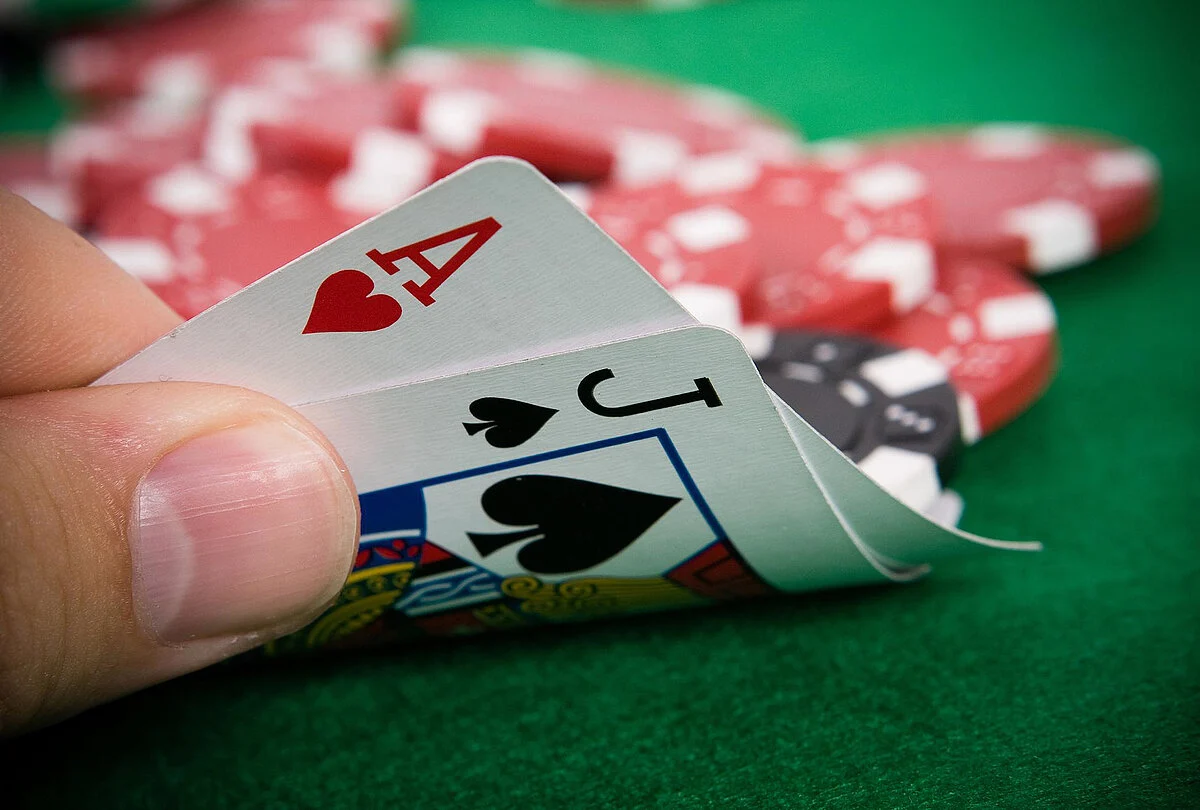
Decision making is the most critical skill in both professional leadership and everyday life. Whether you are managing corporate assets, navigating a career pivot, or organizing daily logistics, success depends on your ability to evaluate information under pressure. Surprisingly, some of the best training grounds for high stakes decision making do not exist in business textbooks or executive boardrooms. They are found across a felt tabletop, played out with a standard deck of fifty-two cards.
Card games serve as miniature laboratories for human behavior, risk assessment, and strategic planning. They force participants to make choices with incomplete information, manage finite resources, and adapt to rapidly shifting environments. Examining the core mechanics of classic card games reveals powerful lessons about cognitive discipline, emotional control, and tactical execution that translate directly into real-world success.
Navigating Uncertainty and Incomplete Information
In an ideal world, every decision would be made with perfect data and absolute clarity. Reality rarely cooperates. Most high-value choices in business and life require acting on partial information, weighing probabilities, and accepting a degree of risk. Card games are built entirely around this exact constraint.
When you pick up your hand in a game, you know your own cards, but your opponents’ hands remain hidden behind a wall of uncertainty. Every action they take, from a subtle hesitation to a bold wager, provides a data point. Successful players do not wait for absolute certainty because waiting means losing. Instead, they build probabilistic models on the fly.
-
Calculating Expected Value: Every strategic choice carries a potential reward weighed against a potential penalty. Evaluating these variables helps separate emotional impulses from rational moves.
-
Reading Behavioral Cues: Observing how competitors react to changing circumstances provides clues about their hidden positions, mirroring how corporate leaders analyze market signals.
-
Adapting to New Data: As cards are played and the board state changes, smart decision-makers update their hypotheses rather than stubbornly sticking to a failing initial plan.
Resource Management and Risk Mitigation
A common trap in competitive environments is squandering valuable resources too early. Whether managing financial capital, operational time, or personal energy, efficient allocation is the bedrock of longevity. Card games constantly test a player’s ability to steward finite assets.
Consider games that involve building hands or wagering over multiple rounds. If you commit all your best resources on the opening hand, you leave yourself completely vulnerable to opponents who conserve their strength for crucial moments. Strategic thinkers understand that pacing is everything. They balance aggressive plays with defensive posture, ensuring they always have a reserve option available when the stakes escalate. This discipline prevents catastrophic losses and keeps opponents guessing about your true capabilities.
Emotional Control and Overcoming Tilt
Perhaps the most valuable lesson card games teach involves emotional regulation. Humans are inherently emotional creatures prone to frustration, overconfidence, and impatience. In psychology, the term tilt describes a state of mental or emotional frustration where a person adopts a reckless strategy due to recent setbacks.
If a player suffers a string of bad hands, the temptation to abandon strategy and chase losses through desperate moves becomes overwhelming. However, logic dictates that past outcomes have no bearing on future random probabilities. Succumbing to frustration only compounds errors.
Mastering a card game requires acknowledging bad luck without letting it hijack your judgment. Maintaining a calm, analytical demeanor in the face of adversity is a superpower in both gaming and professional leadership, ensuring that temporary setbacks do not devolve into permanent failures.
The Art of Bluffing and Psychological Warfare
Strategy is not purely mathematical. Numbers and probabilities form the foundation, but human psychology dictates how those numbers play out in real time. Knowing how to project strength when your position is weak, or conversely, concealing a dominant hand to lure opponents into a trap, introduces a fascinating layer of tactical depth.
Bluffing teaches the importance of perception management. It demonstrates that others often judge your position based on how you present yourself rather than objective reality. In professional negotiations or strategic planning, understanding how to control information flow and manage counterpart expectations is just as vital as having a strong baseline product or argument.
Frequently Asked Questions
How does probability theory apply to everyday card games?
Probability theory helps players estimate the likelihood of drawing specific cards based on what has already been played. While you cannot predict exact outcomes, understanding odds allows you to calculate whether a risky play has a positive long-term mathematical expectation.
Why is emotional discipline harder to maintain during high-stakes games?
High stakes trigger the human brain’s survival responses, flooding the system with adrenaline and cortisol. This biochemical reaction impairs prefrontal cortex function, making impulsive emotional decisions much more tempting than calm, calculated analysis.
What is the difference between tactical and strategic thinking in games?
Tactical thinking involves immediate moves and short-term maneuvers designed to win a single hand or round. Strategic thinking encompasses the overarching, long-term plan that guides your behavior across an entire evening or tournament.
Can playing card games improve cognitive flexibility?
Yes, constantly shifting between offensive plays and defensive preservation forces the brain to adapt rapidly, enhancing working memory, pattern recognition, and problem-solving agility.
How do multi-round card games mirror long-term project management?
Multi-round games require sustained focus, pacing, and incremental milestone adjustments, mirroring how long-term business projects demand steady execution across various phases rather than a single sudden push.
What role does observation play in mastering competitive card games?
Observation allows players to identify patterns in opponent behavior, betting sizes, and timing tendencies, helping them exploit weaknesses and anticipate counter-moves before they happen.
Why do some skilled players still lose despite making mathematically sound choices?
Card games involve an inherent element of variance and chance. Even the most logically sound decision can occasionally result in a loss due to unfavorable randomness, which highlights why long-term statistical success matters more than individual outcomes.
